
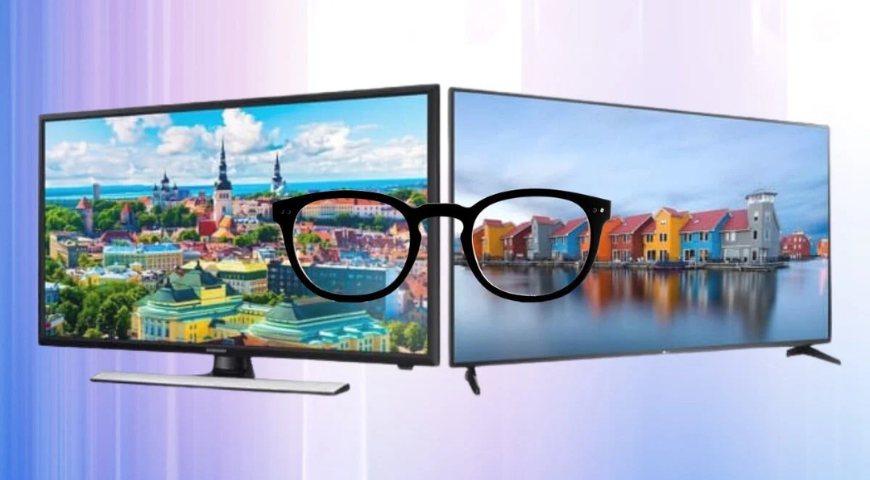
When purchasing a television, one of the most common questions buyers have is about the difference between LED TV and LCD TV. Although these terms are often used interchangeably, they are not exactly the same. Understanding how each technology works and how they differ in performance, design, power consumption, and durability can help you choose the right television for your home or office.
This blog explains the difference between LED TV and LCD TV in simple language so that anyone can make an informed buying decision without technical confusion.
What Is an LCD TV?
LCD TV stands for Liquid Crystal Display Television. This technology uses liquid crystals placed between two layers of glass. These crystals do not produce light on their own, which means an external light source is required to illuminate the display. In traditional LCD TVs, this light comes from cold cathode fluorescent lamps, commonly known as CCFLs.
When electricity passes through the liquid crystals, they align in a way that allows or blocks light, forming images on the screen. LCD TVs were a major upgrade from older CRT televisions due to their flat-screen design, lighter weight, and improved picture clarity.
What Is an LED TV?
An LED TV is actually a more advanced form of LCD TV. The display panel remains the same, but the key difference lies in the backlighting method. Instead of CCFL lamps, LED TVs use light emitting diodes to illuminate the screen. This change in backlighting technology significantly improves picture quality, energy efficiency, and overall performance.
Because of this improvement, LED TVs are thinner, brighter, and more visually appealing than conventional LCD TVs. It is important to understand that all LED TVs are LCD TVs, but not all LCD TVs use LED technology.
Difference in Backlighting Technology
The most important difference between LED TV and LCD TV is the backlighting system. LCD TVs use fluorescent lamps that are placed behind the panel. These lamps consume more power and generate more heat. LED TVs use tiny light emitting diodes that are strategically placed either around the edges or directly behind the screen. This allows better control of brightness and contrast, resulting in a superior viewing experience.
Picture Quality Comparison
When it comes to picture quality, LED TVs clearly outperform traditional LCD TVs. LCD TVs offer decent image clarity, but they often struggle with contrast and black levels. Dark scenes may appear grayish, and color accuracy can be limited.
LED TVs deliver brighter images, richer colors, and deeper blacks. Advanced LED models use local dimming technology, which allows certain areas of the screen to dim independently. This enhances detail and makes images look more realistic, especially while watching movies or high-definition content.
Power Consumption and Energy Efficiency
Power consumption is another major area where LED TVs have an advantage. LCD TVs consume more electricity due to the use of CCFL backlights. Over time, this can lead to higher electricity bills.
LED TVs are designed to be energy-efficient. They require less power to operate and produce less heat. This makes them environmentally friendly and cost-effective for long-term use, especially in households where the TV runs for several hours a day.
Design and Thickness
LCD TVs are relatively thicker because of the fluorescent lamps used in their backlighting system. They are also heavier, which can make wall mounting slightly challenging.
LED TVs have a sleek, slim, and modern design. Their lightweight structure and minimal thickness make them ideal for wall mounting and contemporary interior setups. The improved design also adds to the overall aesthetic appeal of the room.
Lifespan and Durability
LCD TVs generally have a decent lifespan, but the CCFL backlights tend to degrade over time. As a result, brightness may reduce after a few years of usage.
LED TVs are known for their longer lifespan. LED backlights are more durable and maintain brightness levels for a longer period. With proper maintenance, an LED TV can last several years without significant performance issues.
Viewing Angle Performance
Viewing angle refers to how clearly the screen can be seen from different positions. LCD TVs typically have limited viewing angles. When viewed from the side, colors may appear washed out or distorted.
LED TVs, especially models with advanced panel technology, offer better viewing angles. This means you can enjoy consistent picture quality even when watching TV from different corners of the room.
Price Difference
LCD TVs are generally more affordable and suitable for people on a tight budget. However, due to declining demand, their availability in the market has reduced significantly.
LED TVs are slightly more expensive, but the price difference is justified by better performance, lower power consumption, and longer durability. With a wide range of models available today, LED TVs cater to both budget buyers and premium users.
Market Availability and Future Use
LCD TVs are gradually being phased out as newer display technologies become more popular. Finding spare parts or service support for older LCD models can sometimes be challenging.
LED TVs dominate the current television market. They are available in various screen sizes, resolutions, and smart features. From Full HD to 4K and Smart TV options, LED TVs are more future-ready and compatible with modern entertainment needs.
Which TV Should You Choose?
Choosing between an LED TV and an LCD TV depends on your usage and expectations. If your requirement is basic TV viewing and budget is the main concern, an LCD TV can still serve the purpose. However, if you want better picture quality, energy savings, modern design, and long-term reliability, an LED TV is the better choice.
For gaming, movie streaming, sports viewing, and smart features, LED TVs provide a noticeably superior experience.
Conclusion
The difference between LED TV and LCD TV mainly lies in backlighting technology, picture quality, power efficiency, and design. While LCD TVs laid the foundation for flat-screen televisions, LED TVs have refined and improved this technology to meet modern viewing demands.
If you are planning to invest in a new television, choosing an LED TV ensures better performance, lower running costs, and a more immersive viewing experience. Understanding these differences helps you make a confident and informed purchase decision.



Recent Comments